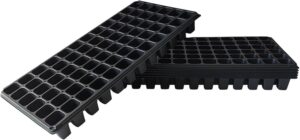
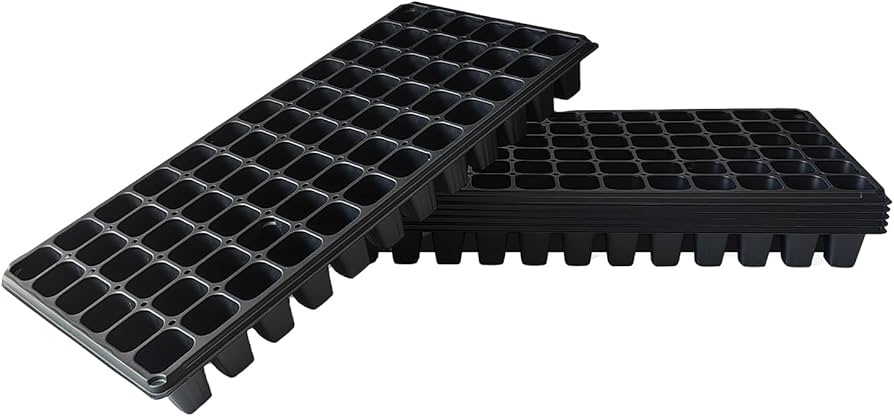
We have restocked quality seedling germination trays. Buy seedling trays in Kenya from Aqua Hub LTD at only KES 150 each. Our trays are available in 28, 50, 66, 72, 160, 200, and 288 cells. Farmers have reported up to 90–95% germination success with trays compared to open seedbeds.
Call 0790719020
This guide explores seedling trays, propagation media, transplanting, and best tray supplier in Kenya.
Quick Takeaways
- Seedling trays improve germination rates and reduce seed wastage.
- Germination trays in Kenya are available at KES 150 each.
- Use sterilized soil mix for best results.
- Transplant when seedlings have 3–4 true leaves.
- Proper maintenance extends tray lifespan.
Why Germination Trays Are Essential for Modern Farming
Traditional seedbeds often lead to uneven germination, root damage during transplanting, and high seed wastage. Using seedling trays solves these challenges by giving each plant its own growing cell.
Benefits of Germination Trays
- Uniform seed germination
- 95% seedling germination and survival rate.
- Strong, undisturbed root systems
- Easy transplanting with minimal shock
- Better disease control
Seedling trays also make it easy to identify different seedling varieties to avoid confusion in research greenhouses.
Types of Seedling Trays in Kenya
1. 72-Cell Trays
Ideal for larger seedlings like watermelon and cucumber.
2. 128-Cell Trays
Most popular for vegetables such as tomato and capsicum.
3. 200-Cell Trays
Perfect for onions and small vegetable seedlings.
4. 288-Cell Trays
For smaller seedlings including chives, herbs, and c
5. Styrofoam Trays
Used in some commercial nurseries but less durable than plastic.
Your choice should depend on crop size, root space needs, and transplant period.
Germination Trays Price in Kenya
Germination trays in Kenya are KES 150 each. The cost can change from time to time depending on the supplier. Most suppliers offer discounts for purchases in bulk.
How to Use Seed Germination Tray Properly
- Use certified hybrid seeds
- Label trays by crop and planting date
- Maintain consistent watering schedule
- Protect from heavy rain
Keep trays slightly elevated off the ground to prevent pest attacks and fungal infections. Raised support structures or tables are appropriate.
Farmers who follow structured nursery management often get viable seedlings.
Which Soil Type Is Best for Germination Trays?
Choosing the right soil is critical. Many ask, which soil type is best for germination trays?
The ideal propagation media is a mix of:
- 50% topsoil (sterilized)
- 30% well-decomposed compost
- 20% cocopeat
This combination ensures drainage and aeration. Avoid heavy clay soil it compacts and restricts root growth.
Commercial farmers use pure cocopeat because it improves moisture retention and reduces fungal infections.
How to Plant Seedlings in Trays
- Fill each cell with recommended soil mix
- Lightly press soil to remove air pockets
- Plant 1 seed per cell (2 for small seeds)
- Cover lightly with fine soil
- Water gently using a fine nozzle
Place trays under shade nets for protection. Avoid overwatering; it causes damping-off.
How to Raise Seedlings in Trays
Raising healthy seedlings requires:
- Proper ventilation
- Less intense sunlight
- Sufficient and frequent watering
- Optimal temperature. For most vegetables 20–30°C is the optimal temperature
To achieve these conditions, seedlings should be grown in trays inside a shade house or greenhouse.
When to Transplant from Seed Trays
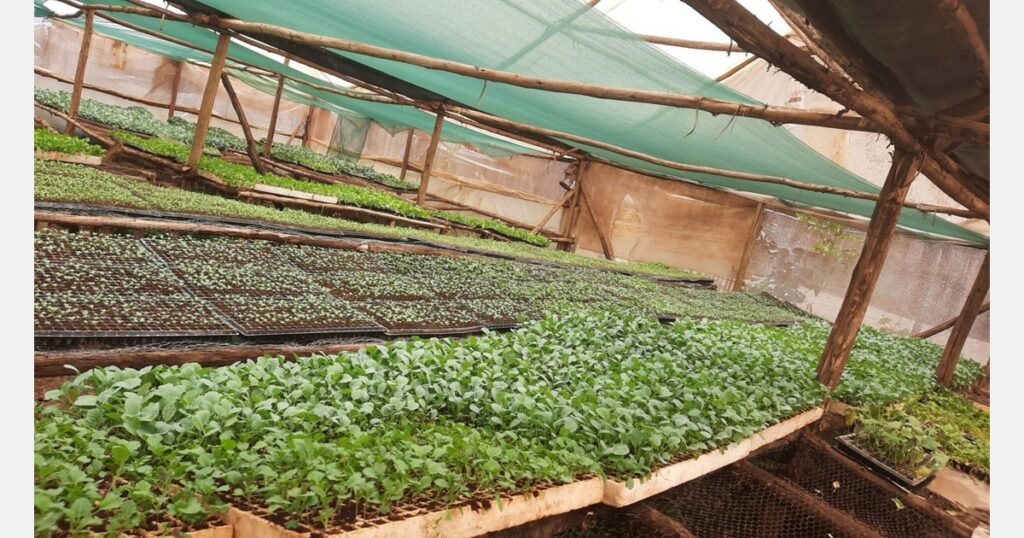
The appropriate time to transplant to the farm depends on the type of crop seedlings you are growing. Transplanting days are as below:
- Tomatoes: 21–28 days
- Capsicum: 28–35 days
- Onions: 30–40 days
- Watermelon: 14–21 days
Transplant your seedlings once they have developed 3 or 4 true leaves.
Delaying transplanting causes root binding, leading to stunted growth later.
Comparing Seed Trays vs Traditional Seedbeds
Traditional seedbeds may seem cheaper, but they:
- Increase root damage
- Waste seeds
- Spread soil-borne diseases
Using seedling trays ensures uniform spacing and efficient seed usage.
Trays are more cost-effective, especially with hybrid seed varieties.
Where to Buy Seedling Trays in Kenya
Seedling trays with 50, 72, 128, 200 and 288 cells are available at Aqua Hub Kenya.
Call 0790719020
How Many Seedling Trays Do You Need Per Acre?
For tomatoes (spacing 20 cm × 45 cm), one acre requires about 15,000–18,000 seedlings.
Using 128-cell trays:
- You’ll need approximately 120–140 trays.
Planning ahead prevents last-minute shortages during planting season.
Cost-Benefit Analysis of Using Seedling Trays
Hybrid seedlings are sold at expensive prices by seedling vendors. Starting your own seedlings using trays will help you save on cost of buying seedlings. It also reduces loss that often results from raising seedlings on open field beds.
Research shows that seedling trays have a 95 per cent seedling germination and maturity rate.
Common Mistakes Farmers Make with Seed Trays
- Overwatering seedlings
- Using unsterilised soil.
- Delayed transplanting
- Use of untreated peat
- Using weak trays
Tips for Successful Seedling Germination in Trays
- Irrigate your seedlings adequately. Don’t overwater or underwater.
- Use cocopeat, peat moss, or vermiculite to propagate seedlings. Ensure your growing media is sterile.
- Ensure the cocopeat or grow media used is treated. Treated cocopeat prevents leaching.
Maintenance and Reuse of Seedling Trays
UV-treated germination trays can last for 3 years and, if well maintained, can be reused.
Here are the ways you can maintain your seedling trays to ensure long-term use:
- Wash each tray after use or once seedlings are transplanted.
- Disinfect with mild bleach solution
- Keep your trays inside shade house or greenhouse environment
- Avoid stacking heavy loads on them when not in use.
Frequently Asked Questions (FAQs)
1. What is the cost of seedling trays in Kenya?
KES 150.
2. Which soil type is best for germination trays?
Cocopeat.
3. When to transplant from seedling trays?
When seedlings have 3–4 true leaves and strong roots.
4. How long can seedling trays be used?
Up to 3 years or more if still in good conditions
5. How to use a seed germination tray for tomatoes?
Plant one seed per cell and transplant after 3–4 weeks.
6. What are the best seed germination trays?
UV-treated plastic trays are durable.
7. Can I grow onions in seedling trays?
Yes. 200-cell trays are ideal for onions.
8. How to raise seedlings in trays without disease?
Use sterilized soil and avoid overwatering.
9. Are seed trays better than seedbeds?
Yes, they reduce root damage and improve uniformity.
10. Where to buy seedling trays in Kenya?
Aqua Hub Kenya.