Organic greenhouse farming is a sustainable solution to farmers and agripreneurs looking to cut fertilizer cost, produce quality and safe food without polluting the environment. It combines natural organic soil with controlled greenhouse environment to enhance productivity and quality for high market demand.
In this article, you will learn practical methods to start and manage organic greenhouse, including fertilizer input, pest control, water management and crops to grow.
Quick Takeaways
- Organic greenhouse farming makes fertilizer application easier and safer.
- You can grow year-round and earn premium prices.
- Drip irrigation reduces water usage and improves feeding efficiency.
- Compost, manure, and biofertilizers build long-term soil fertility.
- Organic pest control is reliable when combined with daily monitoring.
- Small-scale farmers can start cheaply and scale up gradually.
If you need greenhouse structures, pest control nets or cocopeat or other sustainable grow media, Aqua Hub is the reliable dealer.
Call 0790719020
What Is Organic Greenhouse Farming?
Organic greenhouse farming is the cultivation of crops inside a greenhouse using organic fertilizer, natural pest-control methods, and environmentally friendly practices.
Principles of Organic Farming
Organic farming avoids synthetic fertilizers and pesticides, focusing instead on soil fertility, biological pest control, composting, mulching, and biodiversity. When combined with greenhouse technology, farmers gain the ability to:
- Regulate temperature, humidity, and ventilation
- Minimize pest and disease exposure
- Control water and nutrient delivery
- Produce year-round
- Grow high-value crops organically
Why Combine Organic Farming and Greenhouse Technology
For regions with unpredictable rainfall and rising temperatures greenhouses improve resilience. Organic practices enrich soil with nutrients, while greenhouse protection stabilizes yields and reduces losses from climate shocks.
Benefits of Organic Greenhouse Farming
Improve Soil Health
Organic greenhouse farming improves soil life and structure, especially when using compost, manure, vermicompost, and biofertilizers. Long-term studies show that organic greenhouse systems increase:
- Soil organic carbon
- Microbial biomass
- Earthworm populations
- Nutrient availability
- Soil aggregation and moisture retention
Healthier soils require less frequent fertilizer application, reducing your workload and input costs.
Reduces Climate Change Impact
Organic methods reduce pollution, improve biodiversity, and help fight climate change.
Prevents Soil and Water Pollution
By avoiding synthetic fertilizers, you reduce nitrous oxide emissions and protect Kenya’s rivers and groundwater from chemical runoff. Practices like mulching and composting help store carbon in the soil.
Enhances quality food Production that matches market Standards
Consumers in both local and international markets are increasingly demanding chemical-free food products. Organic greenhouse produce can fetch 20 – 40 percent higher prices compared to GMO foods.
Access to niche export markets
Combined with year-round production, this makes organic greenhouse farming highly profitable.
Components of an Organic Greenhouse Structure
Greenhouse Design and Structure
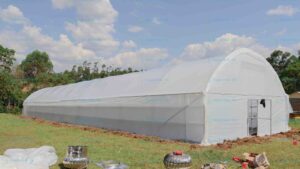
The common greenhouse structures for organic farming in Kenya are:
- Net houses for hot regions like Machakos or Makueni
- Tunnel greenhouses
- Vented Greenhouses
- Wooden greenhouses
These greenhouse structures are designed using:
- Wooden poles or galvanized steel pipes
- UV treated Polythene film 200 microns
- Steel wiggle wires
- Nails or Tapping Screws
- Arch roofing steel pipes.
- Profile channel locks.
Key features for organic production include:
- Good ventilation
- Strong UV-treated polythene
- Insect-proof netting
- Drip irrigation
- Strong gutters and posts to withstand wind
Soil-Based vs. Soilless Media
Organic greenhouse farming can be done using:
Soil-Based Systems
Pros: Builds long-term soil fertility, low cost
Cons: Risk of soil-borne diseases if not well-managed
Soilless Systems (coco peat, compost mixes, or grow bags)
Pros: Cleaner, easier to manage, better root aeration
Cons: Requires more frequent feeding
Water and Irrigation Infrastructure
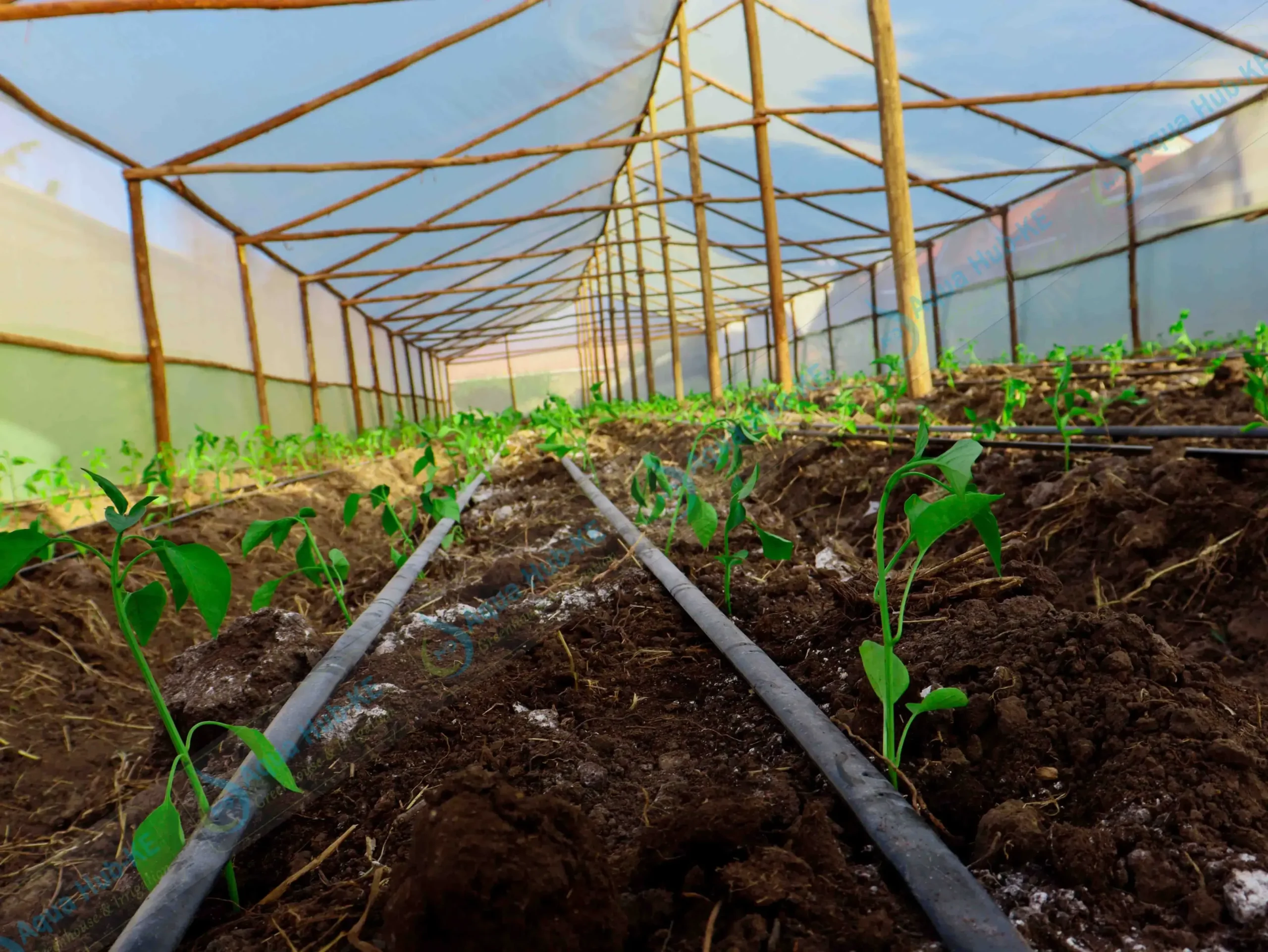
A drip irrigation system is ideal. It allows:
- Direct delivery of water to roots
- Water saving up to 60%
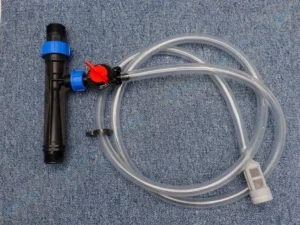
- Easy application of compost tea or liquid biofertilizers
Rainwater harvesting and storage tanks can reduce municipal water costs.
Common Inputs for Organic Greenhouse Farming in Kenya
Common organic inputs include:
- Well-rotted cow or goat manure
- Chicken manure (carefully composted)
- Compost made from dry leaves, crop residues, kitchen waste
- Vermicompost (earthworm compost)
- Compost tea
- Fish amino acid (FAA) or liquid plant extracts
- Biofertilizers (e.g., Rhizobium, Az spirillum, Trichoderma)
These improve soil texture, microbial activity, and long-term fertility.
Fertilizer Scheduling and Application Methods
Organic fertilizers release nutrients slowly making application easier and safer. A basic schedule for greenhouse vegetables in Kenya:
- Before planting: Add 3–5 kg compost per m² or mix compost into growbags
- 2 weeks after transplanting: Apply compost tea
- Every 10–14 days: Use liquid biofertilizers or vermicompost extract
- During flowering and fruiting: Supplement with bone meal or wood ash
Because organic fertilizers are gentle, you avoid problems like root burn or chemical overuse.
Using Compost Teas, Manure, Biofertilizers
Compost tea is especially popular among Kenyan greenhouse farmers because:
- It’s easy to make
- Works well with drip irrigation
- Provides fast nutrient uptake
- Improves microbial life
Biofertilizers help roots absorb nutrients and reduce disease pressure.
Soil Management in Organic Greenhouse Farming
Building Soil Structure and Microbial Health
Healthy soil leads to healthy plants. With organic greenhouse farming methods:
- Organic matter increases
- Microbial activity accelerates nutrient cycling
- Soil becomes softer and better drained
- Root penetration improves
Over time, soil becomes richer and more productive, reducing dependence on external fertilizers.
Carbon Sequestration and Fertility
Organic greenhouse systems store carbon in soil, improving resilience against drought an advantage in arid areas of Kenya.
Crop Rotation, Green Manure & Cover Crops
Crop rotation prevents nutrient depletion and disease buildup. For example:
- Season 1: Tomatoes
- Season 2: Spinach or indigenous vegetables
- Season 3: Legumes or beans (adds nitrogen)
Green manure crops like lablab, cowpea, or sun hemp help maintain soil nutrients.
Pest and Disease Management in Organic Greenhouse Farming
Integrated Pest Management (IPM)
IPM combines monitoring, prevention, and natural treatments. It involves:
- Crop sanitation
- Removing infected leaves quickly
- Sticky traps for whiteflies
- Mulching to prevent soil splash
Beneficial Insects, Companion Plants & Barriers
Farmers use:
- Marigolds to repel nematodes
- Basil to deter certain insects
- Nets to prevent pest entry
- Ladybirds and predatory mites can naturally reduce aphid and thrip populations.
Sanitation, Hygiene & Monitoring
Daily inspection is essential. Remove plant debris, disinfect tools, and ensure good airflow to prevent fungal diseases.
Water Management and Resource Efficiency
Drip Irrigation & Organic Fertigation
Drip irrigation enables:
- Healthy root-zone moisture
- Water saving
- Controlled feeding using compost tea
Farmers in dry regions like Kajiado benefit greatly from drip systems.
Rainwater Harvesting and Recycling
A greenhouse roof can collect thousands of litres of water during rainy seasons.
Minimizing Nutrient Leaching
Use mulching, compost, and slow-release amendments to keep nutrients in the root zone.
High-Value Crops for Organic Greenhouse Farming in Kenya
Vegetables
Best performers include:
- Tomatoes (TZ, Anna F1, Prostar)
- Capsicum (Yolo Wonder, California Wonder)
- Cucumbers
- Lettuce, spinach, kale
Herbs and Indigenous Vegetables
High-value options:
- Basil
- Coriander
- Mint
- Amaranth
- Spider plant (saga)
Choosing the Best Crops for Your Greenhouse
It is important to consider:
- Local demand (e.g., Nairobi hotels love herbs)
- Water availability
- Climate (coastal vs highland)
- Disease pressure
Soil-less Systems and Organic Hydroponics
When to Use Soilless Media
Soilless media like coco peat is ideal when:
- Soil is contaminated
- You have limited space
- You are doing urban farming
Organic Hydroponics (Growing Without Soil)
Using organic liquid nutrients, farmers can grow leafy greens at high density popular in Nairobi container farms.
Pros and Cons
Pros: Faster growth, cleaner environment, fewer soil diseases
Cons: More technical; requires frequent feeding
Cost of Organic Greenhouse Farming in Kenya
The cost of organic greenhouse farming in Kenya varies with the size, design of the greenhouse structure and crops. Common cost includes greenhouse structures ranging from KES 180,000 to KES 1,000,000. Other costs include compost manure, soil-less growing medium such as cocopeat or peat moss which vary as per the required amount.
Revenue Potential
Well-managed organic greenhouses can generate:
KES 200,000 – 600,000 per season depending on crop
Higher margins for herbs and organic-certified produce
Benefits of Organic Farming
Organic greenhouse systems are more resilient due to:
- Stronger soil structure
- Greater microbial activity
- Higher organic matter content
This reduces future fertilizer costs and improves yields.
Common Challenges and Solutions for Organic Greenhouse Farming
High Startup Cost
Solution: Start small with a low-cost greenhouse or tunnel.
Pest Outbreaks
Solution: Use nets, traps, airflow control, and beneficial insects.
Nutrient Imbalance
Solution: Regular composting, mulching, and soil testing.
Tips for Beginners in Organic Greenhouse Farmers
- Start with compost manure which is affordable and effective
- Use a simple drip irrigation system
- Start with easy crops such leafy greens: spinach, kales and lettuce.
- Monitor crops frequently.
FAQs
1. Is organic greenhouse farming profitable in Kenya?
Yes. Farmers often earn higher prices while reducing input costs through compost, manure, and organic pest control.
2. What is the easiest crop to grow organically in a greenhouse?
Spinach, lettuce, and herbs because they require fewer nutrients and mature quickly.
3. Can I use manure directly in my greenhouse?
Only if it is well-composted. Fresh manure can burn plants and introduce diseases.
4. How do I reduce pests without chemicals?
Use insect nets, sticky traps, marigolds, basil, neem oil, and beneficial insects.
5. What irrigation system works best?
Drip irrigation saves water and allows easy fertilizer application.
6. Do I need organic certification to sell produce?
Not always, but certification helps you access high-value supermarket and export markets.
7. Can organic fertilizers be applied through drip irrigation?
Yes. Compost tea and liquid biofertilizers work very well.
8. Does organic greenhouse farming require more work?
No, it generally requires less work long-term due to fewer chemicals and healthier soil.
9. How often should I fertilize organically?
Every 1–2 weeks with compost tea or liquid nutrients.
10. Can I combine soil and soilless methods?
Yes. Many Kenyan farmers grow in soil while raising herbs in coco-peat growbags.